











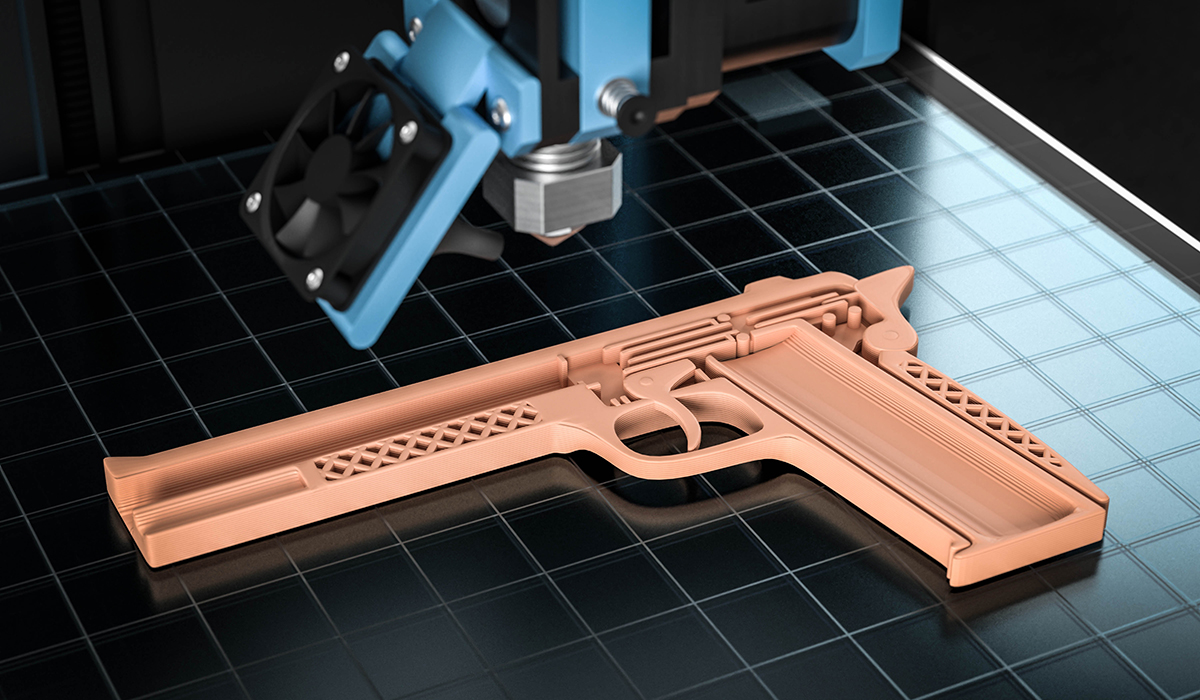
New York lawmakers and Governor Kathy Hochul have proposed a sweeping package of legislation that would significantly expand state regulation of 3D printers, digital firearm design files, and the manufacture of unserialized firearms and firearm components – sometimes referred to as “ghost guns.” If enacted, the proposals would place New York at the forefront of state efforts to regulate not only firearms themselves, but also the emerging 3D printing technology and digital infrastructure used to manufacture them.
Also called additive manufacturing, 3D printing is defined as the construction of three-dimensional objects from a CAD model or a digital 3D model. There are a variety of processes, but, in general, material is deposited, joined or solidified under computer control, with the material (ie. plastics, powders, liquids, metal, etc.) being fused together layer by layer. Although 3D printers have been in existence since the 1970s, relatively recent advances in technology have made them more affordable, practical and readily available for home consumers and hobbyists. The most popular non-industrial machines, which can be purchased in electronic or crafting stores and through various online retailers, typically print objects using plastic materials (PLA, PETG, ABS) or liquid resins (SLA/DLP).
A “ghost gun” is a highly politicized term referring to an unserialized homemade firearm that is partially or primarily produced with a 3D printer. Plastic printed guns are associated with improvised firearms and have become a hot-button topic in the politics of gun control. Although 3D printed arms represent only a small fraction of weapons used in crimes, recent high-profile instances, such as the killing of UnitedHealthcare CEO, Brian Thompson, by Luigi Mangione, who allegedly used a 3D printed firearm with a 3D printed silencer, have spread awareness and fear, while sensationalizing the menacing prospect of proliferating homemade firearms that are untraceable and which bypass background checks.
Against this backdrop, New York State’s latest proposals mirror—and in some respects exceed—regulatory frameworks already adopted in sister states, such as California (AB-2047), which has already enacted a multi‑year series of statutes targeting ghost guns, precursor parts, and digital firearm manufacturing files, with additional laws taking effect later this year.
This alert summarizes the current New York proposals, analyzes some of their legal implications, and compares them with some existing regimes.
1. Mandatory Firearm‑Blocking Technology in 3D Printers
As part of her 2026 State of the State agenda, Governor Hochul proposed legislation that would require all 3D printers sold in New York to include software‑based safeguards designed to block the production of firearms and firearm components.
Key features of the proposal include:
- Minimum safety standards for 3D printer manufacturers operating in or selling into New York’s stream of commerce;
- Software or algorithmic controls capable of identifying and preventing the printing of gun parts; and
- First‑in‑the‑nation regulation aimed at manufacturers rather than end users alone.
This approach represents a significant expansion of firearms regulation into the consumer manufacturing technology sector. Specifically, the proposals are shifting firearms regulation away from weapons and onto general-purpose manufacturing tools. These mandates raise substantial First Amendment, Second Amendment, federal preemption doctrines, Commerce Clause, product liability, Constitutional vagueness and overbreadth principles, and potential compliance questions for hardware and software vendors.
2. Criminalization of Digital Firearm Blueprints and CAD Files
Separate but complementary bills sponsored by Senator Brad Hoylman‑Sigal and Assemblymember Linda Rosenthal – supported by Manhattan District Attorney Alvin Bragg—would close what lawmakers describe as a “digital loophole” in existing law.
Under the proposed legislation:
- Intentional distribution or possession of digital files used to 3D‑print firearms or key components (including auto sears[1]) would be criminalized;
- Manufacturing 3D‑printed firearms or components would be elevated to felony‑level offenses; and
- The law would apply regardless of whether a completed firearm is ultimately produced.
These provisions reflect a growing legislative focus on information‑based regulation, treating digital design files as regulated instrumentalities rather than protected speech. In Defense Distributed v. Attorney General of New Jersey (2026), the Third Circuit held that purely functional firearm CAD files may fall outside First Amendment protection if plaintiffs fail to show expressive intent. However, this case involved distribution bans, not state‑mandated surveillance embedded in hardware. Thus, a mandatory blocking regime may still be challenged as a prior restraint or content‑based regulation, especially where algorithms misclassify lawful designs. For instance, firearm components often resemble innocuous objects and geometry-based detection is inherently error-prone. If blocking standards are vague or discretionary, they risk unconstitutional overbreadth and chilling effects on lawful design activity.
3. Expanded Reporting and Design Requirements
The Governor’s proposal also includes:
- Mandatory reporting by law enforcement agencies of all recovered 3D‑printed firearms;
- New design requirements for firearm manufacturers to reduce the ease of conversion to automatic weapons; and
- Enhanced penalties for unlicensed manufacture and sale of unserialized firearms.
Laws requiring firearm manufacturers to design firearms to resist or prevent conversion from semi-automatic to automatic fire represent a significant expansion of firearms regulation from possession‑based controls to design‑mandate and product‑liability‑style obligations. These laws do not merely criminalize misuse; they shift responsibility upstream to manufacturers, creating a new category of “conversion-resistant design” obligations. Courts have not yet squarely addressed whether a design mandate imposed on manufacturers, rather than the end user, constitutes a meaningful Second Amendment burden or federal preemption conflict on the ground that Congress deliberately chose to regulate devices and possession, not design.
California as a Regulatory Model
California has already enacted one of the most comprehensive state‑level frameworks governing ghost guns and 3D printed firearm components, offering a preview of how New York’s proposals may operate in practice.
1. Regulation of “Firearm Precursor Parts”
California law broadly defines “firearm precursor parts” to include unfinished frames, receivers, and 3D‑printed components that can be readily converted into functional firearms. These parts are now treated similarly to completed firearms for purposes of:
- Background checks;
- Serialization requirements; and
- Licensed dealer involvement in sales and transfers.
Possession of unserialized precursor parts is generally unlawful under California law.
2. Criminal Liability for Digital File Distribution
Effective January 1, 2026, California expanded criminal and civil liability for facilitating the unlawful manufacture of firearms, including by:
Sharing or distributing digital firearm manufacturing files to unlicensed individuals; and
Aiding or abetting the use of CNC machines or 3D printers to produce firearms or components.
California’s approach closely parallels New York’s proposed criminalization of CAD files, signaling a broader national trend toward regulating digital manufacturing code.
3. Regulation of Manufacturing Machines and Accessories
Recent California legislation also introduced new definitions and compliance obligations for:
- “Firearm manufacturing machines,” including certain CNC and 3D printing equipment;
- Firearm accessories and barrels previously considered unregulated; and
- Consumer notice, age verification, and identification requirements for sellers.
- Key Legal and Compliance Considerations
Constitutional and Preemption Issues
As noted above, both New York’s and California’s approaches raise unresolved legal questions, including:
- First Amendment challenges to laws regulating digital files and design instructions;
- Second Amendment challenges under the Heller and Bruen SCOTUS rulings;
- Federal preemption under the Gun Control Act and ATF regulations; and
- Potential Dormant Commerce Clause issues for out‑of‑state manufacturers of printers and software.
These issues are likely to be tested in future litigation, particularly as states regulate upstream technology providers.
Implications for Manufacturers, Platforms, and Distributors
Companies potentially affected include:
- 3D printer manufacturers and software developers;
- Online platforms hosting CAD files or instructional content;
- Firearm parts manufacturers and distributors; and
- Retailers operating in multiple jurisdictions with inconsistent requirements.
The principal compliance challenge is not a single requirement, but the convergence of firearms regulation with digital manufacturing, software, and online content governance, forcing companies outside the traditional firearms industry to evaluate exposure, monitoring capabilities, and multi‑state compliance strategies. California’s experience suggests that compliance obligations under the proposed New York laws may extend well beyond traditional firearms businesses.
Conclusion
New York’s proposed legislation represents a significant evolution and broadening in firearms regulation, extending legal oversight to the tools, files, and technologies that theoretically enable decentralized firearm manufacturing. By closely tracking—and in some respects expanding upon—California’s existing framework, New York appears poised to become a national testing ground for the next generation of gun control laws.
Stakeholders involved in additive manufacturing, digital content hosting, and firearms‑related industries should closely monitor legislative developments and prepare for heightened compliance, enforcement, and litigation risk as these laws move forward.
[1] a small metal or plastic component that converts a semi-automatic firearm into a fully automatic machine gun by allowing it to fire continuously with a single pull of the trigger. Also called a “switch”.