











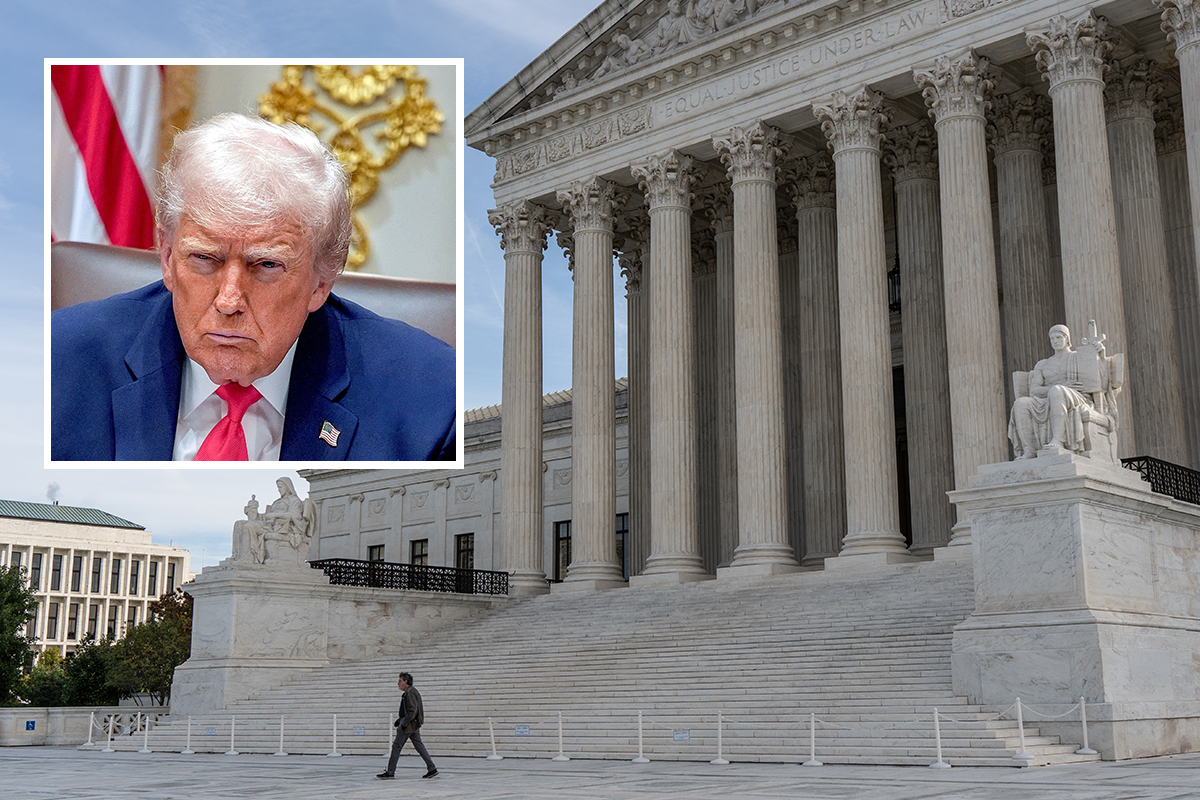
In a bombshell ruling issued Friday morning, the Supreme Court declared President Donald Trump’s sweeping tariffs against foreign imports illegal, and the White House may now be on the hook for tens of billions of dollars in restitution to the countries they originally imposed them upon.
Chief Justice John Roberts, along with conservative Justices Amy Coney Barrett and Neil Gorsuch and liberal Justices Ketanji Brown Jackson, Elena Kagan and Sonia Sotomayor ruled in a 6-3 vote that the International Emergency Economic Powers Act (IEEPA), which Trump used to apply his tariffs, actually does not authorize him to be able to do so in any way whatsoever.
Writing the ruling’s majority opinion, Chief Roberts noted that the IEEPA includes a wide array of powers, but among them there is not “any mention of tariffs or duties.”
“That omission is notable in light of the significant but specific powers Congress did go to the trouble of naming,” Roberts wrote. “It stands to reason that had Congress intended to convey the distinct and extraordinary power to impose tariffs, it would have done so expressly—as it consistently has in other tariff statutes Accordingly, the president must ‘point to clear congressional authorization’ to justify his extraordinary assertion of the power to impose tariffs. He cannot.”
Since taking office for his second term, Trump has levied tariffs on multiple countries, including China, Russia, Canada, Mexico, among many others, totaling tens of billions of dollars; money, which may have to be paid back to the importers, although Chief Justice Roberts did not mention if that was a possibility in Friday’s ruling.
However, in a dissenting opinion, Justice Brett Kavanaugh noted that potential tariff repayments were indeed discussed during oral arguments in November 2025, and said that the process of doing so is likely going to be very messy.
“In addition, according to the Government, the IEEPA tariffs have helped facilitate trade deals worth trillions of dollars—including with foreign nations from China to the United Kingdom to Japan, and more,” Kavanaugh wrote. “The Court’s decision could generate uncertainty regarding those trade arrangements. In any event, the only issue before the Court today is one of law.”