










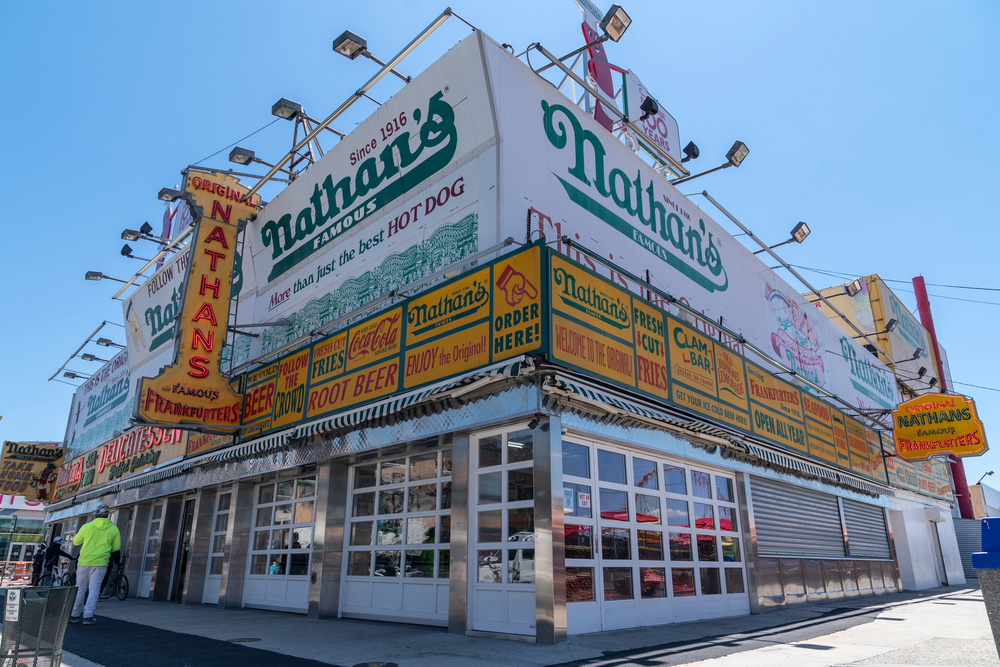
Nathan’s Famous — one of New York’s most recognizable legacy food brands and a company with local corporate roots — is being acquired by packaged-meat powerhouse Smithfield Foods in an all-cash transaction valued at $450 million.
For Long Island’s business community, the headline isn’t just nostalgia. It’s a case study in brand equity, margin pressure, distribution strategy, and how national food conglomerates are positioning for the next cycle of consumer spending.
Deal Terms: $102 Per Share, All Cash
Smithfield will acquire all outstanding shares of Nathan’s Famous for $102 per share. The companies expect the transaction to close in the first half of 2026, subject to customary approvals.
A key detail: Smithfield has already produced and distributed Nathan’s branded products under a long-term license since 2014. With this acquisition, Smithfield is moving from “partner” to “owner,” consolidating the brand and its economics under one roof.
Why Smithfield Wants Nathan’s
Smithfield framed the acquisition as a strategic fit for its packaged-meats portfolio — adding a premium, heritage brand with national recognition and strong retail presence.
Nathan’s delivered roughly $150 million in revenue and $24 million in profit in fiscal 2025, according to reporting tied to the deal.
Those numbers matter because they reinforce why legacy “icon brands” remain attractive in a tight consumer environment: awareness is high, shelf space is entrenched, and the brand’s marketing flywheel (notably, the annual July 4 competition) is already built-in.
Cost Pressures Were Rising — And Consolidation Is One Answer
The deal lands amid ongoing inflationary headwinds in food manufacturing. Nathan’s disclosed that sales costs for branded products rose 27% year-over-year, while the average cost per pound of hot dogs increased 20%.
Smithfield says it expects to realize approximately $9 million in annual savings within two years of closing — a classic acquisition play: integrate operations, reduce duplicated overhead, and improve purchasing leverage.
For business readers, this is the bigger story: consumer brands don’t just “get bought” because they’re famous — they’re bought because they can perform better inside a scaled supply chain.
The Long Island Business Angle
Nathan’s Famous is headquartered in Jericho, which keeps the brand’s corporate presence tied to Nassau County even as ownership shifts to a much larger parent company.
While neither side has framed the deal around job moves, Long Island business observers will watch closely for what tends to follow acquisitions of this size:
-
Back-office consolidation (finance, HR, procurement)
-
Supply chain optimization (contracting, logistics, production efficiencies)
-
Brand investment strategy (marketing spend vs. margin expansion)
-
Franchise and licensing implications (brand standards, promotional cadence, menu innovation)
Brand Equity Still Matters: The July 4 Machine Keeps Running
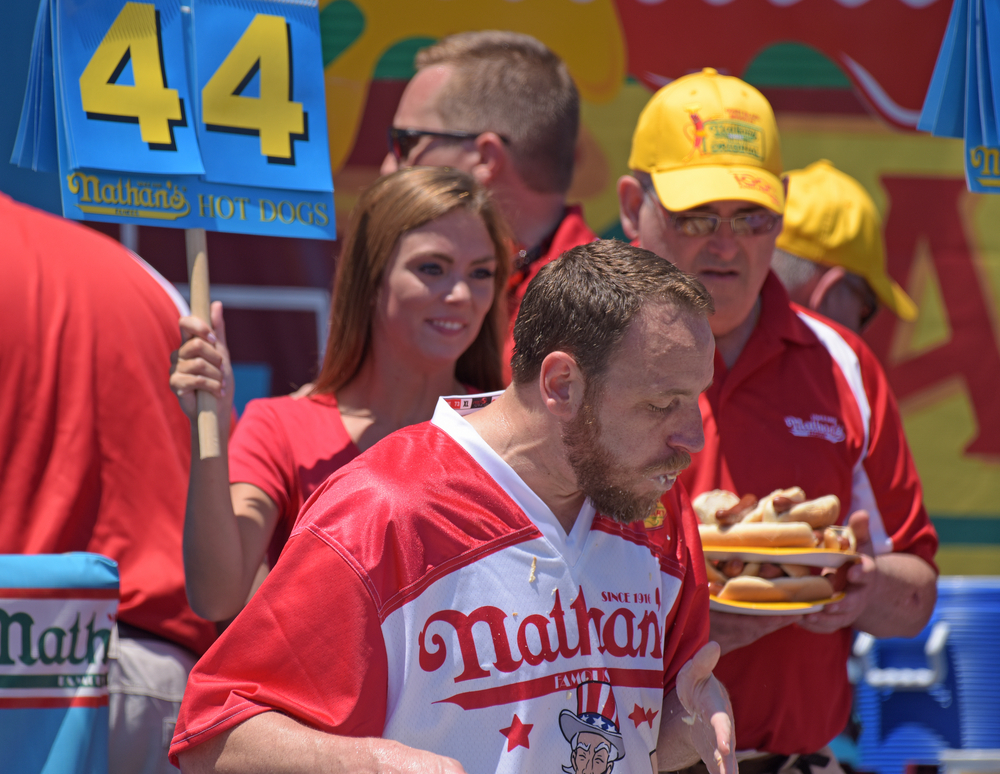
Smithfield said the Nathan’s Famous Hot Dog Eating Contest will continue at the Coney Island flagship — an event that functions as a national marketing moment and a summer-season sales driver.
Joey Chestnut remains the reigning champion after eating 70.5 hot dogs and buns last year, with a record of 76 in 2021.
What to Watch Next
For investors and operators, the next six months will be about execution. The questions that matter:
-
Will Smithfield expand Nathan’s distribution further (new retail channels, international growth)?
-
Will the product mix evolve (new SKUs, premium lines, better-for-you positioning)?
-
How aggressively will cost savings be pursued without diluting brand quality?
-
What happens to Nathan’s public-company reporting cadence once it goes private under Smithfield?
Bottom Line
This $450 million acquisition underscores a clear trend: in a higher-cost environment, scaled operators are consolidating assets that have strong brand recognition and durable retail presence. For Long Island, it’s also a reminder that some of the most recognizable names in American food still maintain local corporate ties — even as ownership becomes increasingly national and global.